
Standard operating procedures training is at the core of how your employees do their jobs. It ensures consistency, quality, and safety. The trends shaping how companies are doing SOP Training include:
They Are Ditching Paper SOPs
Binders on a shelf, or laminated sheets taped to a machine, are giving way to searchable, visual, interactive content that operators can pull up where they’re standing. Paper isn’t disappearing everywhere, but it’s increasingly the fallback rather than the primary format, especially in fast-changing environments where a printed binder can’t keep up.
AI Is Helping Draft SOPs
AI tools are starting to help turn a recorded process or a walkthrough into a first-draft SOP. Drafts are generated from observation, and refined by qualified reviewers.
Structured eLearning
Structured eLearning delivered on company Learning Management Systems with text, audio, video and animation is being used to onboard new hires. That centralization means an operator at one site sees the same instruction as an operator at another, delivered through the same system and updated from a single source rather than a folder of files that drift out of sync across locations.
Interactive Guides
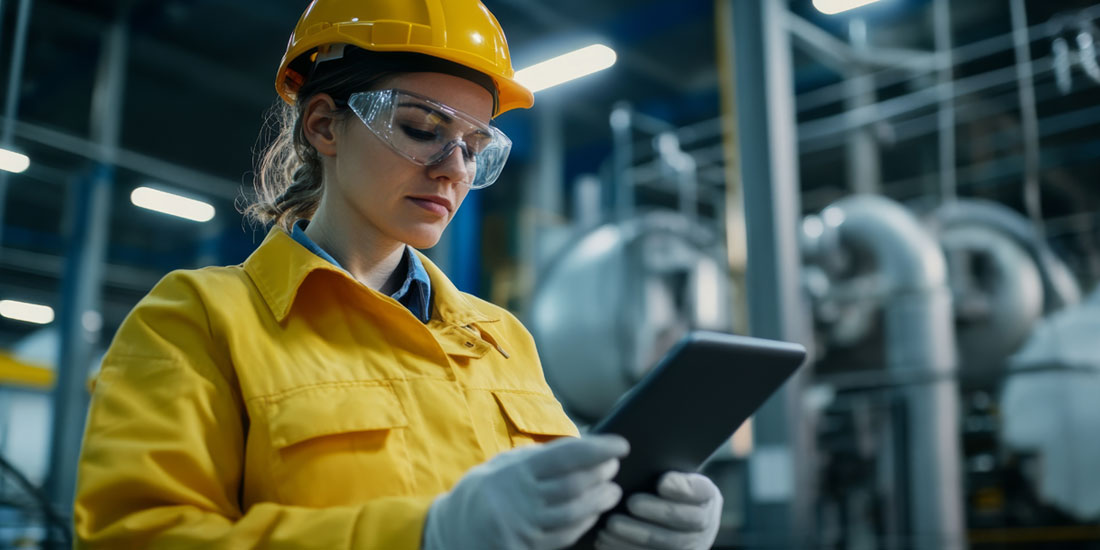
Step by step guides delivered on tablets, phones, or directly at a machine provide just in time instructions to operators and machinists. Instead of memorizing a sequence from a manual read once during onboarding, an operator can follow the exact steps in the moment, cutting reliance on memory for a procedure that might only run once a quarter.
Digital Twin Walkthroughs
3D virtual maps of entire plants combined with augmented and virtual reality provide with immersive experiences. That’s most valuable for procedures too costly, dangerous, or infrequent to practice on the real equipment, letting an operator build familiarity with a process before ever touching the actual machine.
Safety and Compliance Pressure Is Increasing
Regulatory scrutiny, audit expectations, and insurance requirements are all pushing manufacturers toward more rigorous documentation of how work is actually performed, not just what the policy says should happen.
Companies are finding that having an SOP isn’t enough anymore; they need to demonstrate that operators were actually trained on it and can show evidence of that training when asked.
Together, these shifts are pushing SOP training toward something operators can actually use in the moment, not just something they signed off on once. That’s the bar buyers are now measuring a training system against, which is exactly what the next question addresses.