
These are the questions we hear most often when a buyer is deciding whether to buy and build out a configure price quote system.
How Do You Configure The Configure Price Quote System?
The configurator walks the buyer through options step by step, size, material, add-ons, checking technical dependencies in real time as each choice is made. If one selection makes another option incompatible, the system rules it out automatically rather than letting the buyer submit a combination that can’t actually be built.
Getting this right means the rule logic has to be maintained as carefully as the product catalog itself. A configurator that hasn’t been updated to reflect a discontinued option or a new dependency starts producing quotes that engineering has to reject, which reintroduces the exact problem the tool was meant to solve.
Can We Automate Standard Inquiries?
Yes. At more than half of B2B companies, manual standard inquiries tie up between 26 and 75 percent of daily working time, even though the answers already exist somewhere in company systems. The bottleneck isn’t the information, it’s the manual process of retrieving it.
A configurator automates that lookup so buyers get answers to routine questions on their own, and the sales team’s time goes toward the inquiries that actually need a person’s judgment.
Can The Configure Price Quote System Handle Complex Product Variants?
Yes, through a rules engine that governs how components interact with each other. Selecting one option, a specific motor, for example, automatically constrains which other options remain valid, and every selection is validated in real time so an infeasible combination can’t be submitted in the first place.
This is what makes a configurator practical for genuinely complex products rather than just simple ones with a handful of variants. The more interdependent the options, the more the rules engine is doing behind the scenes to keep every path a buyer can take valid.
Can It Do Real-Time 3D and AR Visualization?
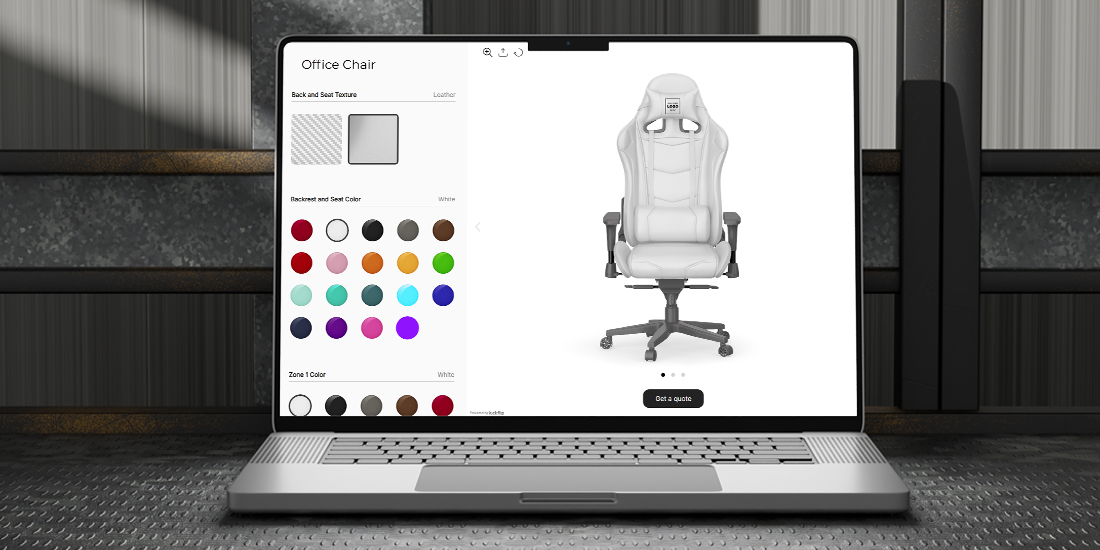
Yes. Buyers can interact with live, photorealistic 3D models where structural constraints prevent invalid component choices before a quote is ever generated. Instead of reading a spec sheet and imagining the result, the buyer sees the actual product take shape as they configure it.
This isn’t purely cosmetic. Seeing constraints enforced visually, in real time, reinforces the same validation the rules engine is already doing, and it gives buyers more confidence in a configuration before they commit to requesting a quote on it.
Can It Integrate With Our ERP?
Yes. Integration lets the configurator pull live pricing, inventory, and cost data from the ERP instead of working off static numbers that go stale the moment costs shift. Once a quote is approved, it pushes back into the ERP as an order record, automatically kicking off fulfillment and production.
Skipping this step is where a lot of configurator projects quietly underperform. A configurator running on a manual price list drifts out of sync with reality within weeks, and buyers notice the gap the first time a quoted price doesn’t hold.
A Technical Aside
A few technical decisions shape how well a configurator performs long-term.
- The rules engine needs a clear owner who updates configuration logic as the product line changes, since stale rules quietly start producing quotes for options that no longer exist.
- Real-time ERP sync matters more than a one-time data import, since pricing and inventory drift out of accuracy within weeks otherwise.
- And question-format content around the configurator, not just the tool itself, makes it easier for AI answer engines to surface these capabilities to buyers who are still comparing vendors.
We Can Help You
We help industrial companies build configure price quote systems that shorten sales cycles and remove the guesswork from complex, configurable orders.