
by Reema Duggal | Aug 19, 2026
These are the questions we hear most often when a buyer is deciding whether and how to move their catalog online.
Can Self-Serve Really Handle Complex Industrial Products?
Self-serve and human expertise work together. Industrial buyers hit real limits that a catalog alone can’t close: a spec that’s almost right, a substitution question, a custom quantity break. No catalog is complete enough to make every question redundant.
What works is designing for both at once: self-serve for the routine cases, and a real person one click away for everything else. The goal isn’t zero human contact, it’s spending human time only on the questions that actually need it.
How Do We Make Sure AI Shopping Tools Can Actually Find Our Products?
Structured, consistent product data is what lets both search engines and AI shopping agents parse your catalog accurately. Traditional search already rewards clean attributes and consistent naming. AI shopping tools raise the stakes further, because they’re reading your catalog programmatically, matching specs against a buyer’s stated requirements rather than a person skimming a page and filling in gaps by judgment.
A catalog with inconsistent units, missing attributes, or specs buried in a PDF becomes invisible to both, even if a human could eventually find it by scrolling. This isn’t a future-proofing exercise. Buyers and their AI agents are already doing this kind of scanning today, and a catalog that isn’t structured for it is quietly dropping out of consideration before a person ever sees the page.
How Does This Integrate With Our ERP?
Most catalogs should pull inventory, pricing, and order data directly from your ERP rather than duplicating it. Where an ERP front-end can serve that role directly, that’s usually the simpler path. Where it can’t, integration keeps stock levels and pricing accurate without manual double-entry.
Skipping this step is where most catalog projects quietly fail. Manually updated pricing and inventory drift out of sync within weeks, and buyers lose trust in the numbers faster than they gained it. The integration work is less visible than the storefront, but it’s what keeps the storefront honest.
How Should We Structure Categories So Buyers Actually Find What They Need?
Industrial buyers want to find the exact product they need in two clicks or less. While they need specific technical details like material grades or pressure ratings, they hate clicking through endless layers of sub-categories.
The perfect category depth uses a shallow menu structure combined with powerful, detailed filters. This setup lets procurement teams instantly narrow down thousands of specialized parts to the exact item that fits their engineering specs, saving time and preventing frustration.
What Does Our Team Need to Be Able to Do Once the Site Is Live?
A catalog is only as good as the team maintaining it. Once the site is live, someone needs to keep product data accurate as the catalog grows, and someone needs to write and photograph new products in a way that holds up, both for buyers and for the AI search tools increasingly involved in how buyers find suppliers.
This is the requirement most industrial companies underestimate going in. The build is a project with an end date; the content is an ongoing operation. Plan for the second one as deliberately as the first.
A Technical Aside
A few technical decisions shape how well a catalog performs long-term.
- The catalog needs to work as well on mobile as on desktop, since B2B buyers increasingly research and reorder from a phone.
- The cost of staying offline or semi-manual isn’t static: it compounds as competitors move their catalogs online and buyers adjust their expectations accordingly.
- Question-format headings and front-loaded, direct answers make content easier for AI answer engines to pull into their responses, not just easier for a human to scan.
We Can Help You
We help industrial companies build eCommerce and online catalog experiences that make it easy for buyers to find what they need and order with confidence.
by Reema Duggal | Aug 18, 2026
Configurable products have relied on slow, manual quoting for a long time, and that’s starting to catch up with the vendors who haven’t moved past it.
Manual Quoting Leads to Errors
Manual quoting breaks down as soon as a product has real complexity. Without an automated system behind it, a sales rep can miscalculate pricing, offer an option that isn’t actually buildable, or hand engineering an order it has to reject once it reaches the floor. Each of those mistakes becomes a revision, and every revision adds days to a deal that was already competing against faster offers.
The problem compounds with product complexity. A configurable line with dozens of interdependent options creates far more room for a manual quote to go wrong than a catalog of fixed SKUs ever would, and the fix usually comes after the customer has already seen the mistake.
Configuration Errors Are an Expensive, Avoidable Risk
The scale of this problem is larger than most sales teams assume. Only about one in four custom manufacturing quotes is fully accurate on first submission, and that gap in accuracy carries a real revenue cost once rework, margin erosion, and delayed production are added up.
None of that cost is necessary. It’s the direct result of asking a manual process to manage a level of complexity it was never built to handle, and it’s fully avoidable with a system that validates a configuration before it ever becomes a quote.
Quote Speed Is Becoming a Deal-Winning Factor
In competitive bids, the vendor who responds first with an accurate number often wins the business outright, regardless of small differences elsewhere. Buyers read a fast, confident quote as a signal of operational competence, and a slow one as a signal of the opposite.
Speed has quietly become one of the most decisive factors in the sales process, even for products where price was once assumed to be the deciding variable. A buyer evaluating three suppliers in parallel rarely waits for the slowest one to catch up.
Real-Time 3D and AR Visualization Are Becoming the Default
Buyers increasingly expect to see what they’re configuring, not just read a spec sheet describing it. Live, photorealistic 3D models let a buyer manipulate a product in real time while the system enforces structural constraints in the background, so an invalid combination never becomes visible as an option in the first place.
This changes the standard for what a configurator needs to do. A tool that only lists options and calculates a price is starting to feel incomplete next to one that lets a buyer see the product take shape as they build it.
Quoting Is Getting Automated With Agentic AI
AI agents are starting to run the quote-to-order process end to end, not just assist with pieces of it. An agent can read an inbound request, whether it’s an email, a PDF, or a portal submission, pull the part numbers and quantities out of it, check inventory, apply pricing rules, and cross-reference credit limits and contract terms before entering a validated order into the ERP.
What used to take days of manual handling can happen in minutes. And when an agent hits something it can’t resolve on its own, it asks a person before proceeding rather than guessing, which is what makes this shift practical rather than reckless.
Knowing what’s changing industry-wide is only half the picture. The next question is what buyers specifically expect once they sit down to configure and quote.

by Reema Duggal | Aug 18, 2026
When a buyer sits down to configure a complex product, they’re evaluating far more than price and specs. Here’s what they’re actually looking for.
Self Serve Configurators
Buyers want to build a quote on their own timeline, without waiting on a call back from sales. When sales, buyers, and production all work off separate systems, information gets lost between them, and a buyer who has to phone in just to get pricing on a standard configuration reads that as friction they’d rather avoid.
A configurator that lets a buyer specify what they need and get an accurate number themselves removes most of that back-and-forth. The buyer stays in control of the pace, but complex assemblies and made-to-order parts carry real risk if a spec is wrong, so sales still confirms the configuration is right before the order goes through.
Guided Configuration That Prevents Invalid Orders
Buyers want the system to catch a problem before they can even select it. As a buyer picks one option, the remaining choices should immediately narrow to whatever is actually compatible, so an invalid combination is never something they’re able to choose in the first place.
This matters because a rejected order after the fact costs the buyer time they’ve already committed to the deal. A guided path removes that risk before it exists.
Error Free Orders
Buyers want confidence that what they configured is exactly what arrives. When sales, engineering, and production rely on separate systems that don’t talk to each other, details get lost or misread somewhere in the handoff, and the order that reaches the buyer doesn’t match what they thought they ordered.
A configurator that keeps configuration, pricing, and order data in one connected system closes that gap. What the buyer built is what gets built.
Shorter Sales Cycles
Buyers want speed without sacrificing accuracy. Sales and engineering teams often spend more time verifying configurations, applying pricing rules, and cross-checking details than they spend actually closing the deal, and every hour of that internal back and forth is an hour the buyer is waiting.
A system that automates the verification work gives buyers a faster path from interest to a number, without losing the accuracy a slower manual process is trying to protect.
Visibility In the Order Process
Buyers want to know where their request stands without having to ask. A status they can check on their own, whether it’s been reviewed, what’s next, and roughly when to expect pricing, keeps them engaged instead of left wondering if the request went anywhere at all.
That visibility matters most in the gap between submitting a configuration and getting a quote back, since that’s the point buyers are most likely to start looking elsewhere.
Knowing what buyers expect is the easier part. The harder questions are the ones you’ll actually face once you start planning the build itself.
by Reema Duggal | Aug 18, 2026
These are the questions we hear most often when a buyer is deciding whether to buy and build out a configure price quote system.
How Do You Configure The Configure Price Quote System?
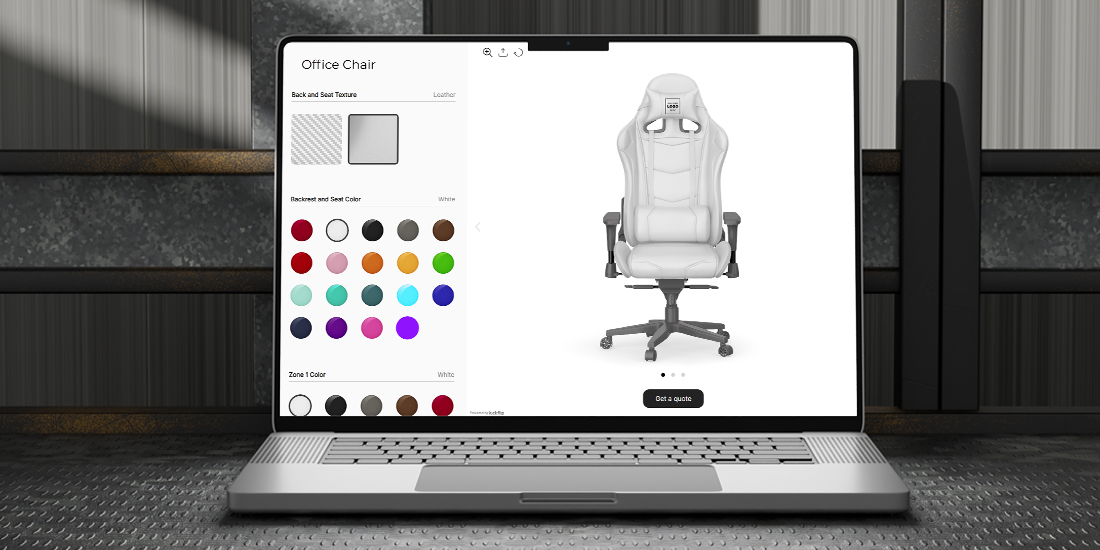
The configurator walks the buyer through options step by step, size, material, add-ons, checking technical dependencies in real time as each choice is made. If one selection makes another option incompatible, the system rules it out automatically rather than letting the buyer submit a combination that can’t actually be built.
Getting this right means the rule logic has to be maintained as carefully as the product catalog itself. A configurator that hasn’t been updated to reflect a discontinued option or a new dependency starts producing quotes that engineering has to reject, which reintroduces the exact problem the tool was meant to solve.
Can We Automate Standard Inquiries?
Yes. At more than half of B2B companies, manual standard inquiries tie up between 26 and 75 percent of daily working time, even though the answers already exist somewhere in company systems. The bottleneck isn’t the information, it’s the manual process of retrieving it.
A configurator automates that lookup so buyers get answers to routine questions on their own, and the sales team’s time goes toward the inquiries that actually need a person’s judgment.
Can The Configure Price Quote System Handle Complex Product Variants?
Yes, through a rules engine that governs how components interact with each other. Selecting one option, a specific motor, for example, automatically constrains which other options remain valid, and every selection is validated in real time so an infeasible combination can’t be submitted in the first place.
This is what makes a configurator practical for genuinely complex products rather than just simple ones with a handful of variants. The more interdependent the options, the more the rules engine is doing behind the scenes to keep every path a buyer can take valid.
Can It Do Real-Time 3D and AR Visualization?
Yes. Buyers can interact with live, photorealistic 3D models where structural constraints prevent invalid component choices before a quote is ever generated. Instead of reading a spec sheet and imagining the result, the buyer sees the actual product take shape as they configure it.
This isn’t purely cosmetic. Seeing constraints enforced visually, in real time, reinforces the same validation the rules engine is already doing, and it gives buyers more confidence in a configuration before they commit to requesting a quote on it.
Can It Integrate With Our ERP?
Yes. Integration lets the configurator pull live pricing, inventory, and cost data from the ERP instead of working off static numbers that go stale the moment costs shift. Once a quote is approved, it pushes back into the ERP as an order record, automatically kicking off fulfillment and production.
Skipping this step is where a lot of configurator projects quietly underperform. A configurator running on a manual price list drifts out of sync with reality within weeks, and buyers notice the gap the first time a quoted price doesn’t hold.
A Technical Aside
A few technical decisions shape how well a configurator performs long-term.
- The rules engine needs a clear owner who updates configuration logic as the product line changes, since stale rules quietly start producing quotes for options that no longer exist.
- Real-time ERP sync matters more than a one-time data import, since pricing and inventory drift out of accuracy within weeks otherwise.
- And question-format content around the configurator, not just the tool itself, makes it easier for AI answer engines to surface these capabilities to buyers who are still comparing vendors.
We Can Help You
We help industrial companies build configure price quote systems that shorten sales cycles and remove the guesswork from complex, configurable orders.

by Reema Duggal | Aug 13, 2026
Companies spend months winning a customer, but sometimes lose the thread after the contract’s signed.
The Post-Sale Gap Is Becoming a Real Retention Risk
Winning the deal used to feel like the finish line, but it’s really just the starting point of the relationship that actually determines whether a customer sticks around and becomes your champion.
A buyer who signed off confidently, can still end up confused and second-guessing the purchase within weeks if they don’t understand quickly how to work with what they just bought.
That gap doesn’t usually show up as a formal complaint. It shows up quietly as hesitation, as slow adoption, as a renewal conversation that’s harder than it should be.
One-Size-Fits-All Communication Doesn’t Work
Most companies aren’t staying silent after the sale, they’re sending something. The problem is what they’re sending: a couple of dense, one-size-fits-all emails that try to cover the buyer, the day-to-day users, and finance all in one document.
Nobody fully reads it, because no single part of it is fully relevant to any one of them. The buyer already knows why they bought it, the users don’t care about payment milestones, and finance doesn’t need a feature walkthrough. When everyone gets the same message, most of it gets skimmed or ignored, and the result looks identical to having said nothing at all.
The Shift Toward Role-Based, Structured Content Libraries
The companies getting this right are building structured content libraries organized by role: the buyer gets context on the decision and what’s next, the users who’ll actually work with the product or service get practical how-it-works content, and finance gets a clear view of payment milestones and billing.
Each person finds what’s relevant to them without wading through material meant for someone else’s job. This isn’t about producing more content, it’s about organizing the content that already needs to exist so it actually reaches the right person.
That distinction is becoming the real differentiator between companies whose customers feel confident post-sale and companies whose customers quietly regret the purchase.
This Content Needs a Home Customers Will Actually Return To
Structured content only works if people can find it again later, not just receive it once and lose it in an inbox. That’s pushing more companies to give this content a permanent, logged-in home rather than relying on it living in email threads that get buried within days.
Is your post sale content structured for your customers roles?
Does it build confidence in your company?
See the Enable Your Customers section for more information.