
by Reema Duggal | Jun 3, 2026
The factory floor has always demanded precision — in process, in output, and in people. As manufacturing companies navigate labor shortages, rapid automation, and global competition, the pressure to build a skilled, adaptable workforce has never been greater. eLearning isn’t a nice-to-have anymore. In 2026, it’s one of the most powerful levers manufacturers have for scaling efficiently and sustainably. Here are three reasons why.
Speed Up Onboarding Without Slowing Down Production
Every day a new hire isn’t fully productive is a day that costs money. Traditional classroom-based training pulls experienced operators off the line to teach, creates scheduling bottlenecks, and delivers inconsistent results depending on who’s doing the teaching. eLearning changes that equation entirely. With structured digital modules, new employees can complete safety certifications, equipment orientation, and process walkthroughs before they ever set foot on the floor — or during off-shift hours without disrupting production schedules.
Role-specific learning paths mean a machine operator and a quality inspector aren’t sitting through the same generic content; they get exactly what they need, when they need it. The result? Faster time-to-competency, lower training costs per employee, and a consistent standard of knowledge across every facility — whether you’re onboarding 10 people at one plant or 300 across five.
Keep Pace With Technology Without Constant Retraining Cycles
Manufacturing in 2026 looks nothing like it did a decade ago. Cobots, AI-assisted quality control, digital twins, and advanced ERP systems are now standard equipment at competitive facilities. The challenge isn’t just adopting new technology — it’s making sure your workforce can actually use it. eLearning platforms give manufacturers the agility to deploy updated training the moment a new system goes live. Rather than waiting months to schedule an instructor-led course, teams can access short-form video walkthroughs, simulations, and scenario-based modules immediately.
Microlearning — short, focused bursts of content — is particularly effective on the plant floor, where workers can pull up a 5-minute refresher on a new software feature between shifts rather than attending a half-day seminar. This continuous learning model doesn’t just reduce downtime during technology transitions. It builds a culture of adaptability — a workforce that expects to grow with the company rather than fear being left behind.
Scale Across Multiple Sites Without Multiplying Costs
Growth is the goal, but growth has traditionally come with a training tax. Every new facility means new trainers, new schedules, new inconsistencies. For manufacturers expanding into new markets or managing distributed operations, that overhead can quietly erode the margin benefits of scale. eLearning breaks that cost curve.
Once a training program is built, it can be deployed across unlimited locations at essentially zero marginal cost. A compliance module developed for a plant in Canada is just as useful and just as consistent at a facility in Mexico or Malaysia. Localization tools built into modern LMS platforms make language and regional adaptation straightforward, not a separate project. Beyond cost, centralized learning data gives leadership visibility they’ve never had before: which teams have completed mandatory safety training, where knowledge gaps exist, and how quickly new hires are ramping up — all in a single dashboard.
The Bottom Line
The manufacturers winning in 2026 aren’t just investing in better machines. They’re investing in better-prepared people. eLearning is no longer an HR initiative — it’s an operational strategy that directly impacts throughput, safety, and scalability. The companies that treat workforce development as infrastructure — not an afterthought — are the ones building teams capable of sustaining growth, not just surviving it.

by Reema Duggal | Apr 11, 2026
In the manufacturing industry, productivity and business success hinges on more than just isolated efforts in production processes, technology improvements, or on the job knowledge transfer. A cohesive strategy that aligns business objectives, standard operating procedures (SOPs), learning initiatives, and practical assessments across various departments can significantly enhance productivity, efficiency, product quality, and ROI.
Leading manufacturers that have mastered this integrated approach enjoy increased market responsiveness and operational agility. This article explores how synchronizing these elements can foster an environment of continuous improvement and innovation.
Objectives Alignment: The Strategic Blueprint
A unified approach begins with clear and cohesive objectives that align with the company’s vision and market demands. This means setting goals not just for production volumes or quality standards, but also for workforce development, innovation, and sustainability. These objectives should be communicated clearly across the organization, ensuring that from the executive suite to the shop floor, every employee understands and works toward these common goals. The case of Siemens AG demonstrates this well, as they align their technological advancements with workforce training to ensure both machinery and manpower drive towards enhanced productivity and innovation.
Standard Operating Procedures (SOPs)
Standard Operating Procedures are the backbone of operational efficiency and consistency in manufacturing. By developing SOPs that are not only comprehensive but also integrated across departments, companies ensure that every action taken is in sync with broader operational goals. This prevents bottlenecks and errors that often arise from departmental silos. For instance, Toyota’s production system integrates SOPs into every aspect of its operations, which minimizes waste and optimizes productivity through lean manufacturing principles.
Integrated eLearning: Bridging Knowledge Gaps
eLearning is a critical tool for ongoing employee development. However, its real value is realized when it’s tailored to the specific needs of the manufacturing floor and aligned with the company's strategic objectives. By involving Plant Management, Engineers, Training Managers, and Shop Floor Supervisors in the creation of eLearning modules, companies can ensure that the content is both practical and relevant across the business. General Electric’s use of their Brilliant Learning platform demonstrates how custom eLearning solutions can enhance understanding of complex machinery and processes, leading to improved performance and innovation.
Shop Floor Practice Training: Real-World Application
While eLearning provides the theoretical knowledge necessary for manufacturing operations, practical training on the shop floor ensures that employees can apply this knowledge effectively. Integrating hands-on training with eLearning content helps in reinforcing best practices and ensures compliance with safety and quality standards. Such training should reflect the SOPs and be updated regularly to incorporate new techniques and technologies. BMW Group’s training centers, for example, provide employees with the opportunity to work on actual production lines under expert guidance, enhancing their skills and adherence to company standards.
Continuous Assessments: Measuring Progress and Performance
To truly integrate and synchronize training and operational procedures, continuous assessments are essential. These evaluations, conducted jointly by HR and department heads, help in measuring the effectiveness of training programs and the adherence to SOPs. They also provide critical data that can be used for further refining operations and training modules. Companies like Intel use sophisticated metrics and KPIs to assess everything from individual performance to machine efficiency, allowing them to make informed decisions about adjustments in training or operations.
Conclusion
For manufacturing companies, the integration of objectives, SOPs, eLearning, and assessments is not just a strategic advantage but a necessity in the modern industrial landscape. Companies that successfully integrate these components can expect not only improved efficiency and product quality but also enhanced employee satisfaction and innovation. As the industry continues to evolve, this holistic approach will likely become the standard, driving manufacturing towards even greater heights of success.
by Reema Duggal | Sep 29, 2025
I've worked in the tech industry a long time. I've worked with enterprise applications, oen source applications, productivity applications, and a million plugins.
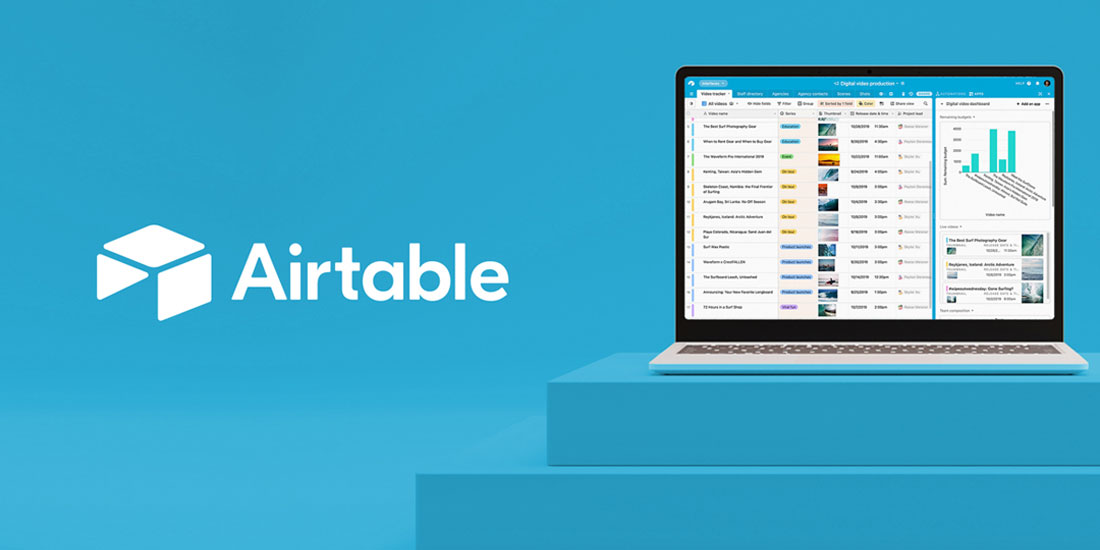
Recently, as the low code movement gains steam (and I lead the Roadmap To MVP Programs for women entrepreneurs with regional Innovation centers WEtech and Haltech, some notable software players stand out. Today, I need to talk about my conversion to Airtable.
Their slogan is:
Build A Better Way To Work
Airtable’s intuitive yet powerful platform gives everyone the flexibility to create their own solution and make work flow faster.
5 Things I Love
- It's like Excel on steroids. It is a database, but instead of having to write SQL code and queries, you add your column headers as fields, enter your data in rows, link records in different tables, and then organize it in every way possible. I am realizing sometimes now when in Excel or Google Sheets - I'm getting frustrated that I cannot view my data in single record, kanban, or cards views. Sometimes, I find myself copying excel data into an empty Airtable table just so I can really interact with the information and understand it.
- Gather data through Airtable Forms in minutes. It's just another view. Just like above, create your column headers as fields in your main table, create another view called Form - and add your logo. Drag and drop any fields in the form out that you do not want to show, share the form with a link or embed it, and Go! It takes mere minutes.
- Automations and Extensions greatly improve workflow. When a record is added, send an email, or send a slack message, or append a row in Google Sheets. So many ways to improve workflow, simplify life, and try new processes in very little time.
- On a Pro Plan, one year of backups. Well, that is a no brainer. You can always pull a snapshot back into your database if something goes wrong. However, I do keep the schema backed up separately.
- Airtable integrates with everything. It has some great pre-built out of the box connectors, but with Zapier or Make - it can integrate with a lot of other software. Currently, it seems to be leading - with a ton of companies vying to show they integrate with Airtable.
Give it a try. The Airtable Community is great. Lots of help.
www.airtable.com

by Reema Duggal | Aug 11, 2025
Robert Gagné’s Nine Events of Instruction, grounded in the behaviorist approach to learning, provide a structured framework for designing effective and engaging educational experiences.
This framework, developed by educational psychologist Robert Gagné, outlines nine instructional steps to enhance the learning process:
Gain Attention
Capturing learners' attention is crucial for setting the stage for learning. Techniques such as asking unexpected questions, presenting puzzles, or using multimedia elements like videos or music can engage students and prime them for learning.
Inform Learners of the Objectives
Clearly stating the learning objectives helps students understand what they are expected to achieve. This can be done by outlining the objectives at the beginning of a lesson and relating them to real-world applications to motivate learners.
Stimulate Recall of Prior Learning
Activating prior knowledge helps learners connect new information to what they already know. This can be achieved by reviewing previous lessons, discussing related experiences, or conducting activities that draw on existing knowledge.
Present The Content
Effective content delivery is essential. This involves organizing the material clearly and using diverse methods such as lectures, visual aids, and hands-on activities to cater to different learning styles.
Provide Learning Guidance
Guidance can take the form of detailed explanations, case studies, and examples that illustrate the concepts being taught. Providing scaffolding and supplementary materials helps learners understand and retain the new information.
Elicit Performance
Allowing learners to practice new skills reinforces their understanding. This can be through low-stakes assignments, interactive activities, or group discussions, providing opportunities for students to apply what they've learned in a supportive environment..
Provide Feedback
Feedback is critical for learning. It should be timely, specific, and constructive, helping learners understand what they did well and where they can improve. Different types of feedback, such as evaluative, remedial, and descriptive, can address various learning needs.
Assess Performance
Assessing learners’ performance ensures that the learning objectives have been met. This can involve quizzes, tests, or practical assessments, and should be aligned with the stated objectives to measure knowledge and skills accurately.
Enhance Retention and Transfer
Facilitating the transfer of knowledge to real-world contexts helps enhance long-term retention. Techniques include repeated practice, linking concepts across modules, and using creative assignments that encourage learners to apply their knowledge in new situations.
Gagné’s framework is highly valued for its systematic approach to instructional design, ensuring that each step builds on the previous one to support comprehensive and effective learning experiences. For educators, this model provides a clear roadmap to structure lessons that are engaging, informative, and conducive to long-term retention.
Sources:

by Reema Duggal | Dec 28, 2024